Project Co-design of a set of architectural mediation cards
Context Study project
Teaching Tupos, Ensa Nantes
Teachers Pauline Boyer
Place Nantes (44)
Date 2021
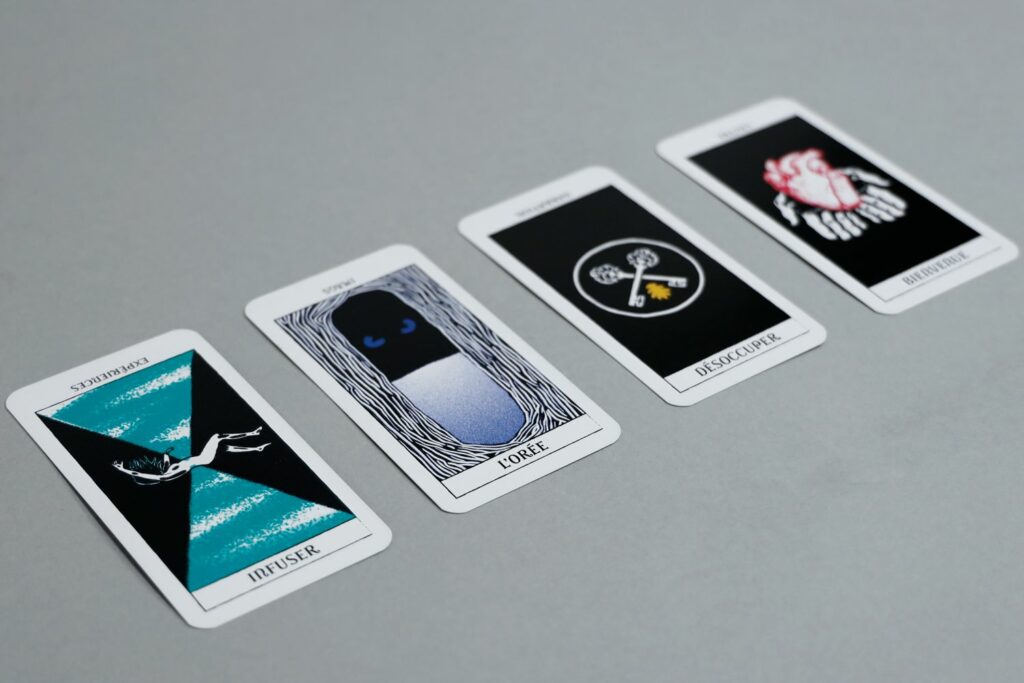
The architectural design process, although partly constrained by technical limitations specific to each project, begins above all with personal creative research. This research is based on individual sensibilities developed before, during and after our studies through work, travel, but also through reading and images that have influenced us. These sensibilities, or architectural affinities, form the basis of this work carried out within the framework of Tupos at Ensa Nantes.
Through an almost monographic compilation of our readings, photographs, project sketches, and drawings made on the corner of a table, we compared and showcased our sympathies, our personal whims, and how they influence our design process. For my part, I identified four terms that better capture my architectural concerns.
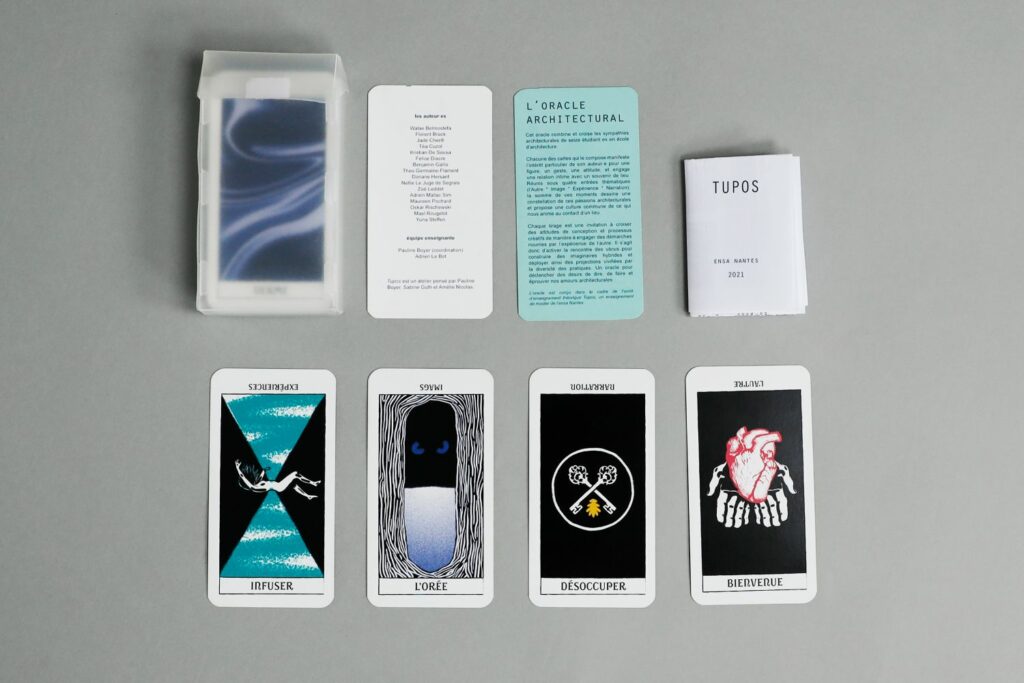
My first encounter with space came through exploring empty places, not necessarily abandoned, but whose uses are becoming less and less common. Whether it be marshalling yards overgrown with weeds, dilapidated factories, or gardens left fallow. All these places in a state of désoccupation offer views of landscapes reminiscent of ruins. A form of melancholy, but also an apprehension of what the place might have been like before.
My second architectural affinity comes from the idea of home. This space can be public or private, narrow or spacious, material or immaterial, but in a sometimes strange way, it envelops us with its generosity. Space, through its characteristics, offers us its bienvenue. It is difficult to conceive of this type of space in impersonal projects, which is why my practice tends towards a form of collective, co-designed architecture.
The third sensitivity illustrated here is l’orée. Located at the interface between two environments, the edge marks the end of the meadow and the beginning of the forest. It is the transition to another space which, like a threshold, marks the beginning of something new. I have drawn this thick boundary in the form of sequences of entrances to a dwelling or in the form of visual spaces linking the intimate and the communal.
The last architectural style stands out from the other three, transcending them. The désoccupation, bienvenue andorée all open onto spatial devices where infuser implies a methodology. Architecture cannot do everything, but it can do a great deal. Of course, the design of spaces influences our moods and our quality of life, but above all, it reflects our societal organisation. Produced by a society at a given moment in time, architecture is often the product of a power that reinforces itself and imposes itself through its spatialisation. This last point is therefore more of a reminder to myself not to neglect the impact of my creations on the world and its inhabitants.