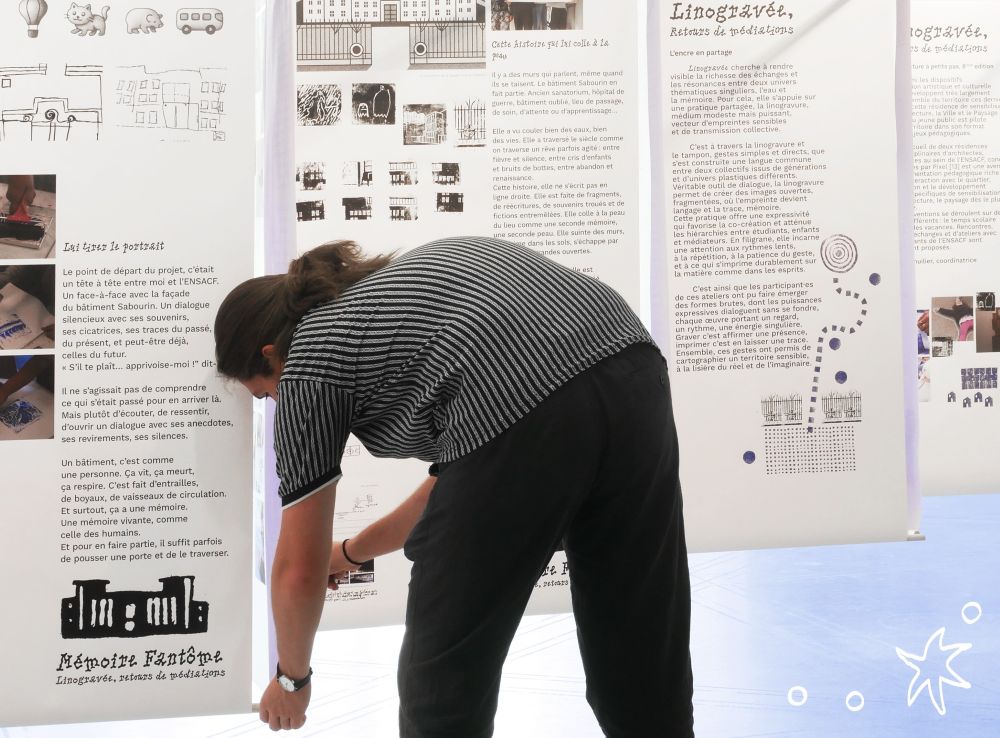
Project Conception and execution of Linogravée, an exhibition showcasing architectural mediation through linocut printing
Missions Scenographic design and production, content production and formatting
Commande Pixel [13] + Ensa Clermont-Fd + DRAC Auvergne Rhône-Alpes
Budget 300 €
Partners Collectif Supercali + Collectif CALK
Place Clermont-Ferrand (63)
Date 2025
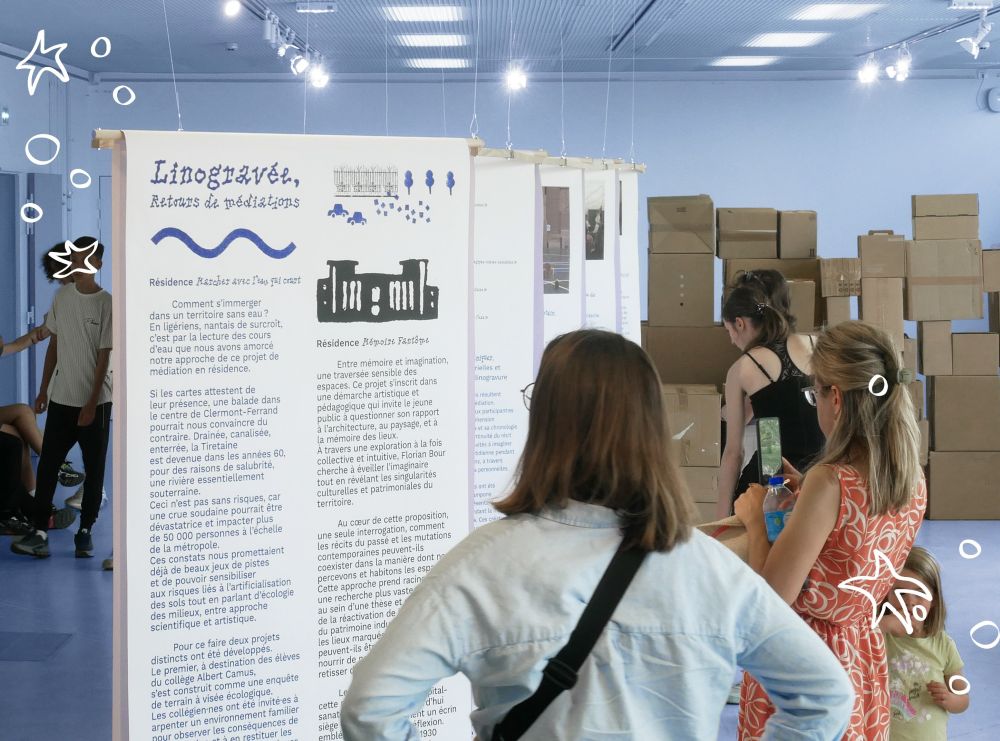
Using the exhibition to pursue mediation
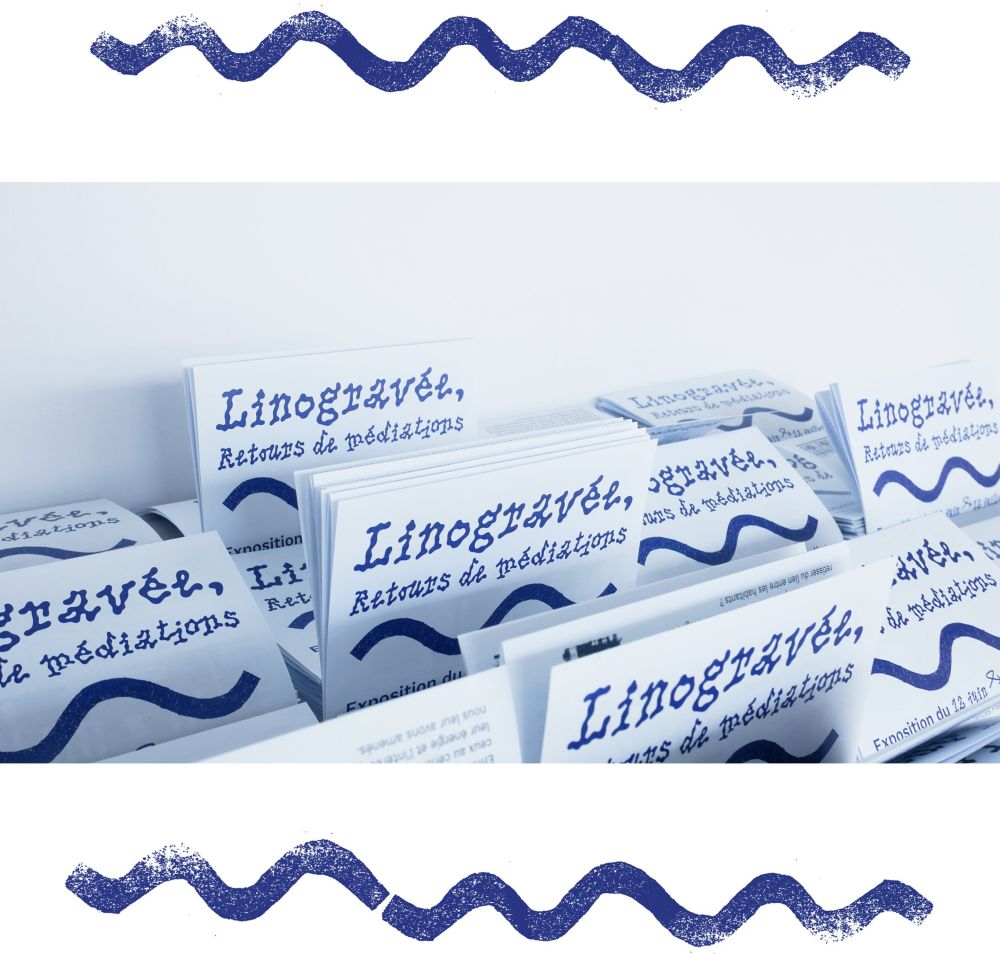
The twin residency L’architecture à petits pas (Architecture in Small Steps) consisted of five weeks devoted to working with master's students at ENSA Clermont-Ferrand, secondary school pupils at Collège Albert Camus and children at Centre Mercœur on the themes of architecture, urban morphology and the wider landscape. Our project, Marcher avec l’eau qui court (Walking with Running Water), encourages a wide range of participants to explore water's place in the Clermont-Ferrand metropolitan area. Invisible most of the time, the river sometimes emerges and becomes an effective focal point for urban morphology, landscape and architecture. An exhibition of the results was on display at Ensa Clermont-Ferrand from 12 June to 12 July 2025 under the title Linogravée.
Focused on creating a link between the university and its neighbourhood, this residency, supported by regional arts authorities and the association Pixel [13], enabled us to develop a whole new teaching approach combining surveying and linocut printing.
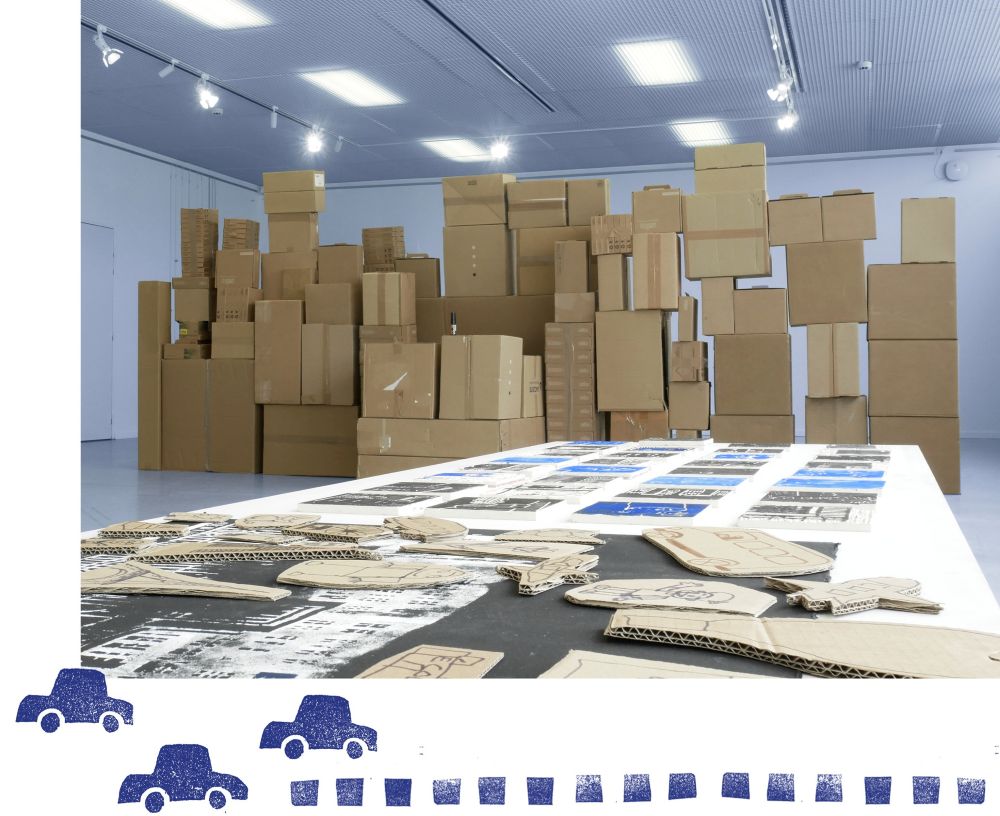
These works are the result of an artistic and educational residency for two separate educational projects designed at Villa Sabourin, a place where people meet and different sensibilities come together. Between individual and collective productions, these creations range from linocuts to drawings, from models to collages, including writing and performance. This diversity of media reflects the richness of the exchanges that took place and the perspectives offered on the two main themes of the exhibition: water in blue and memory in black.Produced in workshops with children from nursery school to university, including secondary school, these works bear witness to a process of transmission as much as creation. They tell us stories that are sometimes intimate, sometimes speculative, weaving mental or urban landscapes that dialogue with each other. By placing themselves on the margins of disciplinary classifications, Linogravée presents a cartography of sensibilities where each individual imprint enriches our collective memory.
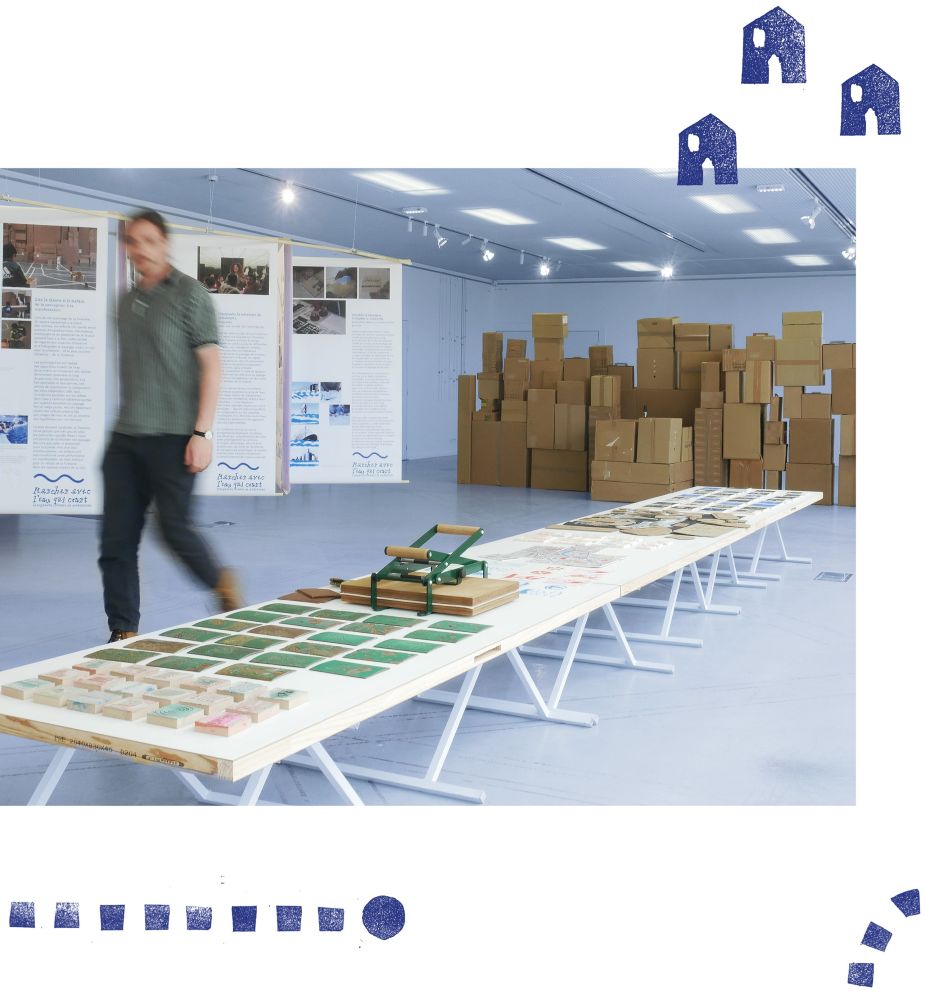
Towards a site-specific scenography
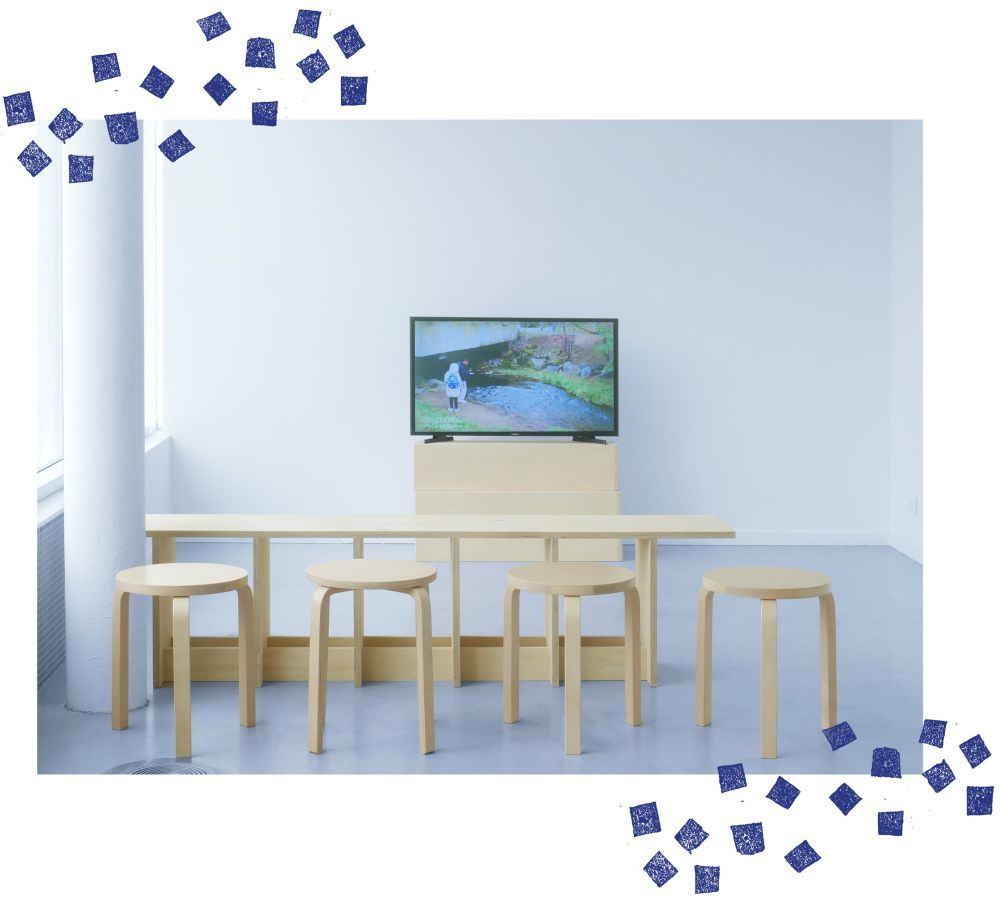
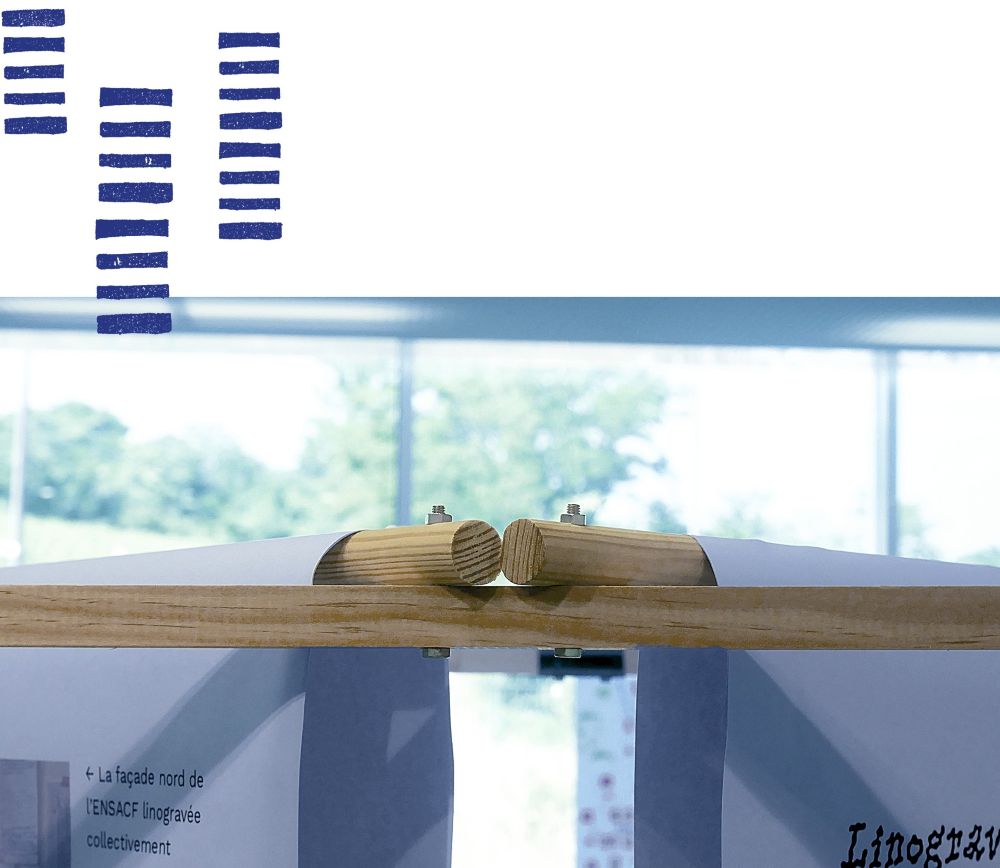
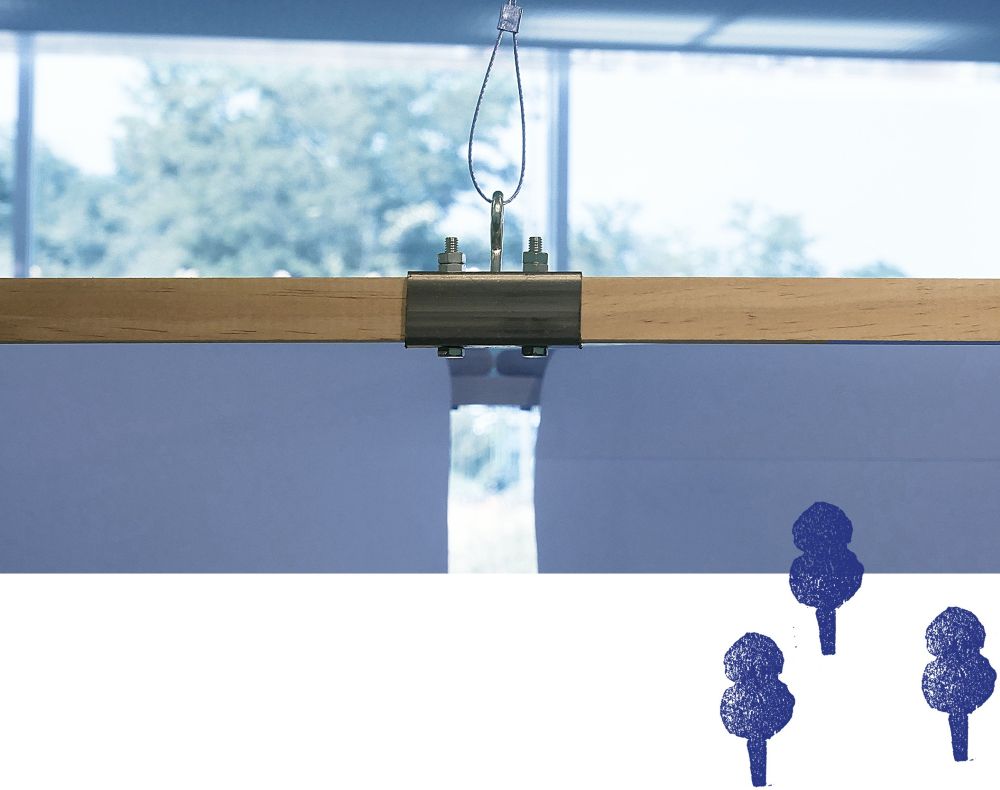
La scénographie de Linogravée 's scenography links these two themes in a central installation called ‘The Wave’: aquatic eddies, ripples of memory. This wave structures the exhibition, inviting visitors to make comparative readings, juxtaposing the two mediations, Marcher avec l’eau qui court and Mémoire Fantôme , like the pages of the same open book. This exhibition is neither linear nor hierarchical: it can be interpreted according to one's movements and points of view. The scenography reflects the values promoted by this residency: horizontality, co-creation, conviviality. Linogravée thus becomes a sensory experience where architecture, landscape, urbanism and visual arts interact without imposing themselves.